

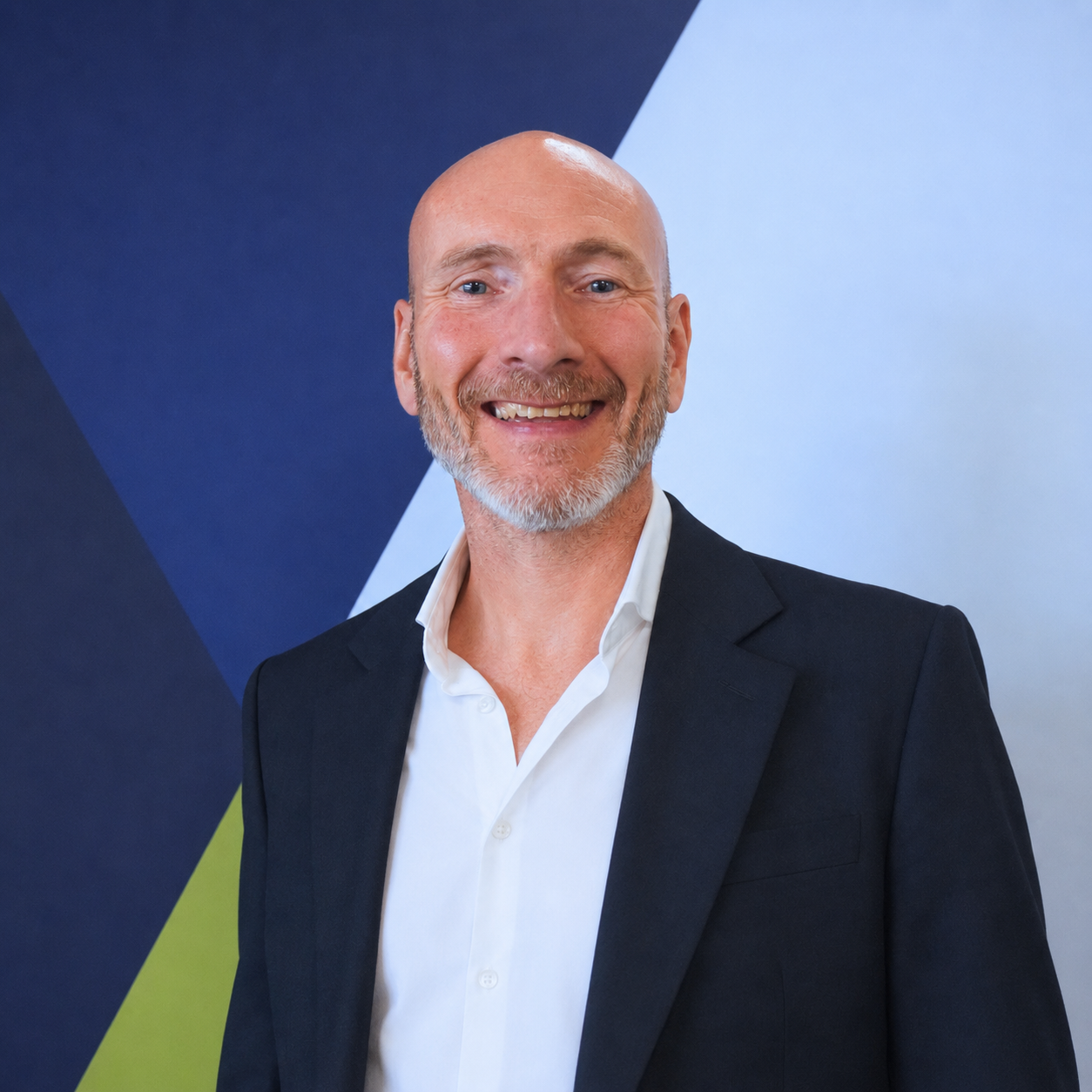
There are some people who always knew exactly what they were going to do. James Hartley was not one of them.
Today, James is a Director at Serrations, the specialist business known around the world for the tungsten carbide inserts used in surgical instruments. He has spent decades helping build the company into a global name in its niche.
He knows the customers, the process, the products and the pressure that comes with running a specialist manufacturing business where quality is everything. But none of that began with a grand plan. In fact, when James talks about how he came into the business, he does so with the kind of honesty that tends to make stories more interesting, not less.
“I did politics,” he says. “And I was only there for a very short period of time.” It is a line that tells you something about him straight away. No posturing. No myth-making. Just the truth, told plainly.
He had not set out to join Serrations. At that point, the business itself was not even fully Serrations as it would later become. It was part of his father’s wider carbide operation, a world of drill tips, wear parts and specialist materials. The medical side began with a request: a Sheffield surgical instrument company came to James’s father with a small insert and asked whether he could make something similar.
For years, that work remained part of something broader. Then things started to shift. “When I left university, my dad had just bought a machine that could grind the teeth in when the carbide was hard,” James says. “And he just started experimenting with that.”
That moment mattered. So did the timing. James came back home, by his own telling, “with my tail between my legs,” and his father told him to come and work in the factory for the summer while he figured out what came next. At the time, James thought he might go into hotel catering and management. Manufacturing was not the dream. It was just what was in front of him.
Then the work got hold of him. “Just that summer, working on those products and developing something new… it fascinated me,” he says. “It felt exciting that it was something new that we were working on.”
That excitement came partly from the technical challenge. Grinding tungsten carbide is specialist work. Getting the geometry right, choosing the right blades, refining the process and learning through trial and error is not something you bluff your way through. It is painstaking. It is specific. And it suited him.
But there was something else going on too.
“I was working side-by-side with him on something that my dad and I were both learning together, rather than him teaching me,” James says of working with his dad. “So that was really quite nice.”
That said, they were not starting from scratch. James’s father brought with him a deep well of relevant knowledge: forty years of working with tungsten carbide, as well as a degree in Metallurgy. So while the two were learning this new chapter of the business together, they were doing so with a strong technical foundation already in place.
That matters, because Serrations did not grow out of guesswork. It grew out of experimentation, yes, but experimentation shaped by experience, judgement and an understanding of the material itself.
That sense of building something together sits quietly underneath the whole Serrations story. This was not a polished business plan dropped into the world fully formed. It was a family business finding its shape through experimentation, setbacks, persistence and the slow accumulation of know-how. And there were setbacks.
The first big order Serrations produced under that new way of working was for a Pakistani company. It was large, ambitious and, for a young business, slightly overwhelming. “We spent a long time making those, sent them out, and they all came back, because we’d made them slightly wrong,” James says. “So it wasn’t a great start, really, for our first big order.”
That could have knocked the whole thing sideways. Instead, they remade the order. The customer was happy. And the relationship endured. “That company still orders from us now,” James says. “We’ve dealt with three generations from that Pakistani company now.”
That, in a way, tells you a lot about Serrations. It is a business built not on flash, but on resilience. On sticking with the problem. On getting it right. On earning trust over time. It also helps explain why James cares so much about protecting the things that made the company strong in the first place.
Over the years, Serrations grew into a globally respected specialist manufacturer. The company became known for doing one thing exceptionally well, and for doing it consistently. That focus mattered. It still does.
During the Kaleidex acquisition process, James kept coming back to a simple question: how would Serrations fit?
There were, naturally, moments of caution. Any founder or long-term business owner would feel the same. When you have spent decades building a reputation, safeguarding quality, and creating a loyal workforce, growth for its own sake is not enough. The fit has to be right.
What reassured James was not just what Kaleidex wanted to buy, but what it seemed to value. “What we liked about Kaleidex is that they valued the history of the company,” he says. “They valued our workforce.”
That was not a small thing. For James, Serrations is not just process or product. It is people. It is customers who have stayed for years. It is staff who have grown with the business. It is specialist knowledge that cannot be copied overnight because it lives in habits, judgement, experience and relationships.
Kaleidex, crucially, seemed to understand that.
And once the acquisition happened, that understanding was followed by action. “They were true to their word,” James says. “They came in and said, what do you need? Is there any single-point failure?”
That question led to immediate investment in machinery, helping reduce risk in a process where one critical machine failure could stop production. For a specialist business, that kind of support matters because it does not just help growth. It protects continuity. It creates resilience. It gives a business more room to move.
For James, that has helped sharpen the focus on what comes next.
Part of that next chapter is about capacity. Part of it is about operational improvement. And part of it is about markets that are opening up fast, particularly in robotic surgery. “The robotic systems, there’s all sorts of those being developed around the world,” he says. “And we’re involved with… must be about 20 companies.”
That is an exciting place to be. Serrations may make small inserts, but their role inside surgical instruments is critical. As surgical technology evolves, so does the opportunity for a specialist manufacturer that already understands precision, grip, performance and consistency at a very high level.
That is the thing about businesses like Serrations. From the outside, they can look niche. Inside, they are often much more consequential than they first appear. James seems to understand that instinctively. He understands, too, that the future is not about abandoning what made Serrations successful. It is about building on it carefully.
There is a maturity in that. A sense that real progress is not about noise. It is about staying close to what you are good at, while making sure the business around it is stronger, more scalable and better supported than before.
And perhaps that is why James’s story fits the Made by People series so well.
Because this is not really a story about a neat career path. It is not a story about someone who mapped everything out at 21 and followed the blueprint perfectly. It is a story about curiosity. About setbacks. About family. About learning by doing. About getting the first big order wrong, remaking it, and carrying on anyway.
It is also a story about stewardship. James helped build Serrations into something distinctive. Now, as part of Kaleidex, he is focused on making sure that distinction is preserved and strengthened, not diluted.
That means protecting the culture. Backing the people. Investing in the right machinery. Supporting customers well. And making sure that a business built on specialist excellence has the platform to go even further.
For James, that decision was never only commercial. It also mattered on a personal level that joining Kaleidex felt like the kind of move his dad would have approved of. That sense of continuity, of protecting what had been built while giving it the support to go further, clearly shaped how he thought about the future.
For all the scale of what comes next, that original spark still feels close at hand: a summer in the factory, a new process, a technical challenge, and the realisation that this work was, in fact, exciting. Not the path he expected. But clearly the one he was meant to take.
Known and trusted throughout the medical industry
The communication between your technical team and our R&D team is great. I also feel your speed as a business to address functional prototypes has been superb… rapid prototyping is more than just fulfilling the order at pace, it involves real partnership between Kirkstall’s technical machining team and the design engineer to find the best fit between desire and reality, and for the business needs, to do this as fast as possible”
Founder/CEO
UK based orthopaedic OEM
Innovating for a healthier, active future.
Looking ahead, the demand for high-precision medical devices will only grow as the population continues to age and seek active lifestyles. Meeting this demand requires a marriage of medical insight and engineering innovation.
Kaleidex is proud to be at this intersection, partnering with orthopaedic surgeons, medical device companies, and healthcare providers to deliver the tools that make modern surgeries possible. Whether it’s an IM Femoral Alignment Jig for a knee replacement or any number of other surgical instruments, our focus remains on driving innovation and reliability in medical manufacturing.
The result of this focus is tangible in people’s lives. A grandmother can dance at her granddaughter’s wedding because her knee replacement was guided with utmost accuracy. A middle-aged marathon enthusiast can run again after a well-aligned joint repair. A young athlete can have confidence that surgical hardware will support their return to play.
These success stories start with a vision of improving quality of life and are realized through precise execution at every step, from design, to manufacturing, to the skilled hands of a surgeon.
Medical devices like the IM Femoral Alignment Jig play a pivotal role in improving patient outcomes. They support mobility by enabling surgeries that eliminate pain and restore function. They reduce recovery time by facilitating surgical precision, leading to less invasive procedures and quicker rehab.
And they enable longer, more fulfilling lives by helping implants last longer and patients stay active into older age. As the healthcare sector rises to meet the needs of an ageing and active population, advanced precision engineering is key.
This article was first posted on the Kirkstall Precision website as part of a series on manufacturing, visit the Kirkstall news page for in-depth explorations of bone reamers and knee trials.