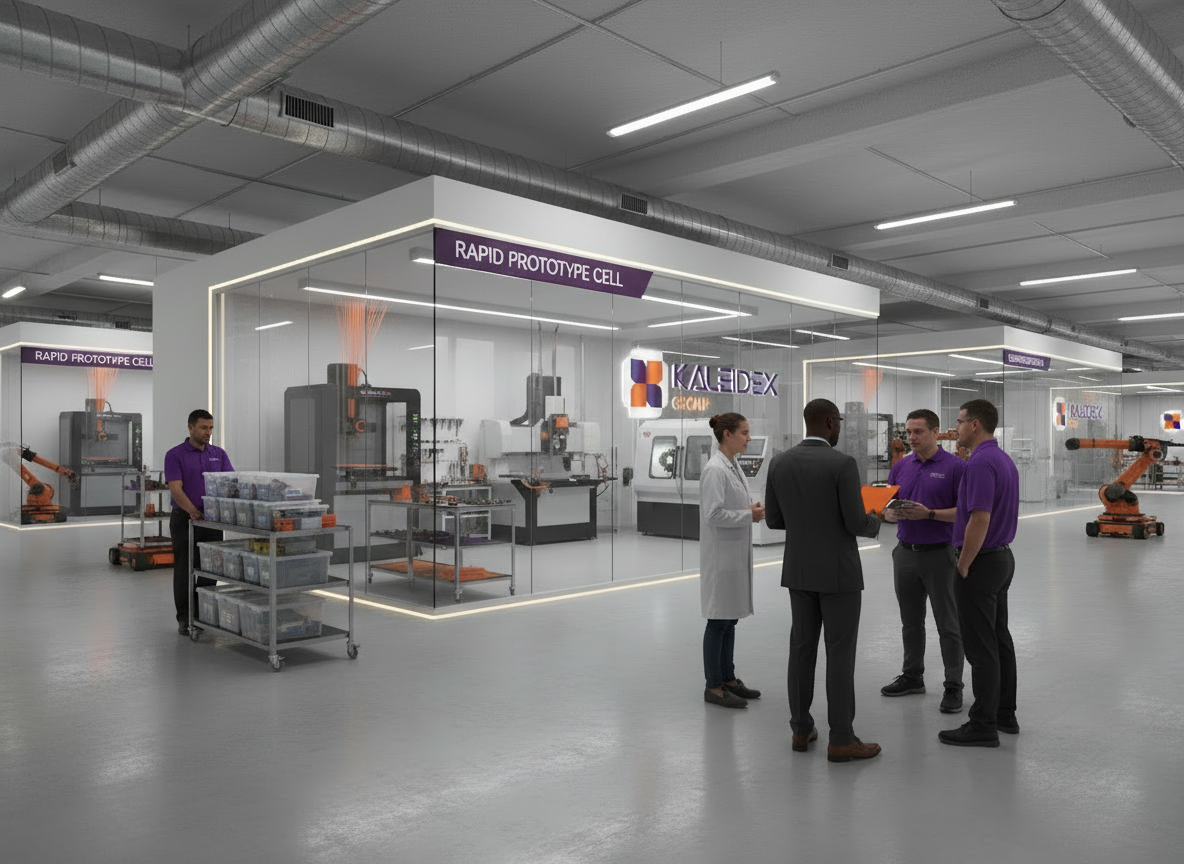

When Chris Spencer talks about operations, he doesn’t talk about it as a back-office function. He talks about it as something that shapes the future. That makes sense when you look at the path that brought him to Kaleidex Group.
Chris has spent three decades inside global manufacturing environments, including 20 years at Kimberly-Clark and more than 10 years at Smith+Nephew, working across engineering, contract manufacturing and complex international supply chains.
He has seen scale. He has seen systems. He has seen what good looks like when it is built properly, and what it costs when it is not. Now, as Group Operations Director at Kaleidex, he is applying that experience in a very different kind of environment: one with pace, ambition and room to build.
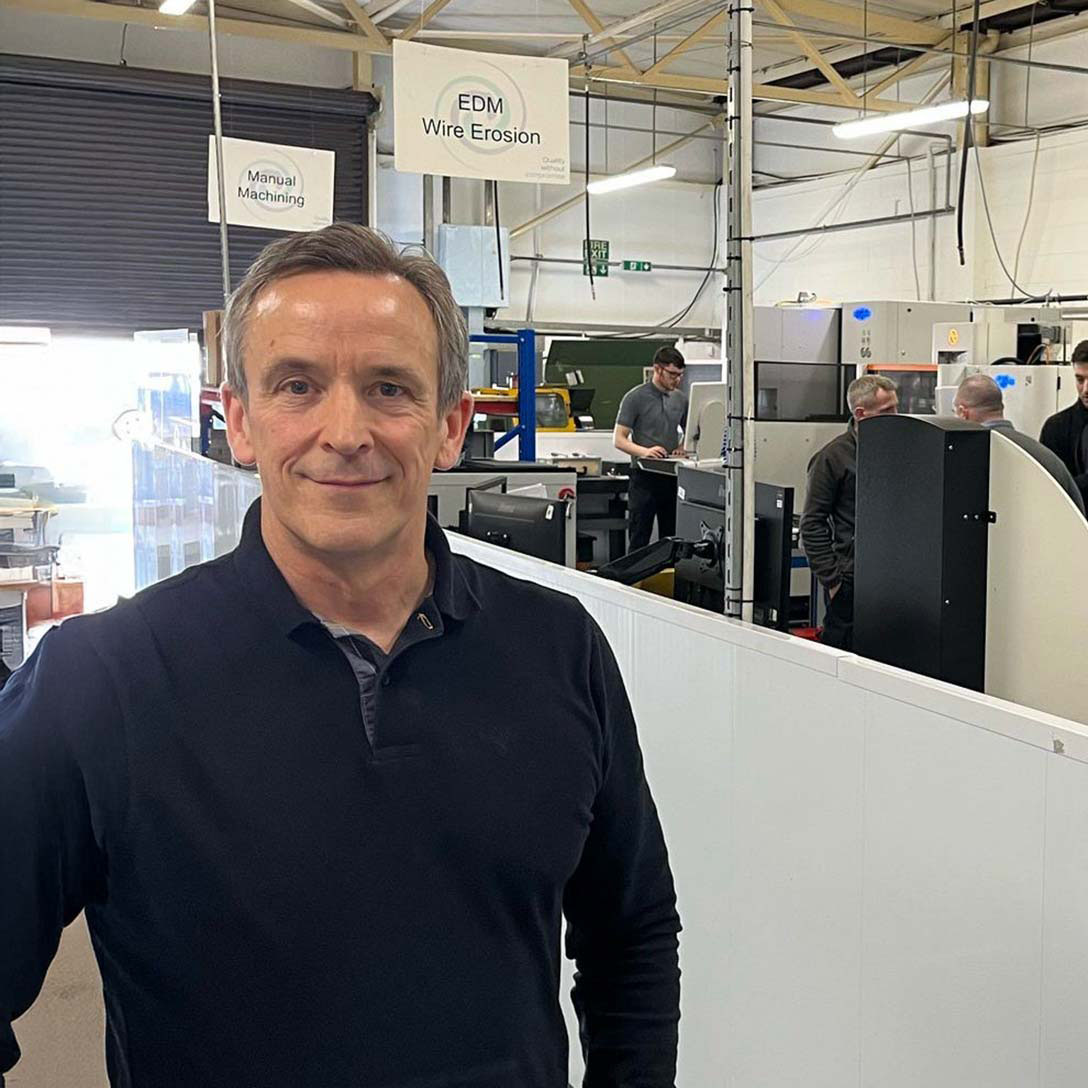
“I’ve got 30 years’ previous experience in global blue-chip companies,” he says. “But really the planets aligned at that point. Kaleidex were looking for somebody that was experienced in medical, ideally somebody experienced in contract manufacturing… and that really leaned into where my skill set was. So it was a natural fit.”
That fit is not just about experience on paper. It is about what Chris sees when he looks across the group today: strong businesses, strong cultures and strong people, but also a huge opportunity to accelerate what comes next.
“What really engaged me, and has engaged me, is our group… it’s not a political animal,” he says. “We’re not spending a lot of time working through politics that’s getting in the way of doing things, getting stuff done.”
That matters. Because for Chris, operations is not about preserving complexity. It is about removing it. It is about creating the structures, processes and capability that allow good people to do exceptional work, more consistently, at greater scale.
Across the Kaleidex Group, he sees businesses that have already done a “fabulous job” to get to where they are. But he also sees what happens when specialist organisations grow quickly without always being exposed to the full discipline of advanced manufacturing strategy.
“There’s a lot about manufacturing that they don’t know, because they’ve not been exposed to it,” he says. “And that means that we can accelerate the capability growth, quite quickly.”
That, in many ways, is the heart of Chris’s role: helping the group fill in the blanks. Not by tearing things down, but by strengthening what is already there. Identifying where the processes need tightening. Where the structures need evolving. Where the people and capability gaps are. And where operational improvements can have a real commercial impact.
“There’s just an awful lot of improvement, and transformation that we can drive across these organisations,” he says, “that means you can have a downright effect on how you affect the bottom line and profitability of the organisations.”
But if the short-term challenge is about operational improvement, the bigger story is about what Kaleidex is building next.
That story is K1.
For Chris, Kaleidex One is not simply a new facility. It is a statement of intent. A chance to create something fit for the future instead of continually adapting what came before.
“Our mission isn’t to buy and break,” he says. “Our mission is to buy and build.”
K1 emerges from that mindset. With existing operations constrained by footprint and legacy layouts, the opportunity was clear: bring together complementary capabilities, create a co-located site and design it properly from the ground up.
“When you start to look at… how similar their operations are, it just made sense to move to a co-located site,” Chris says. “Because that provided a solution for both sides, but also provided synergy for the group, where we could take the best of both organisations, combine that, and then become an even stronger organisation going forward.”
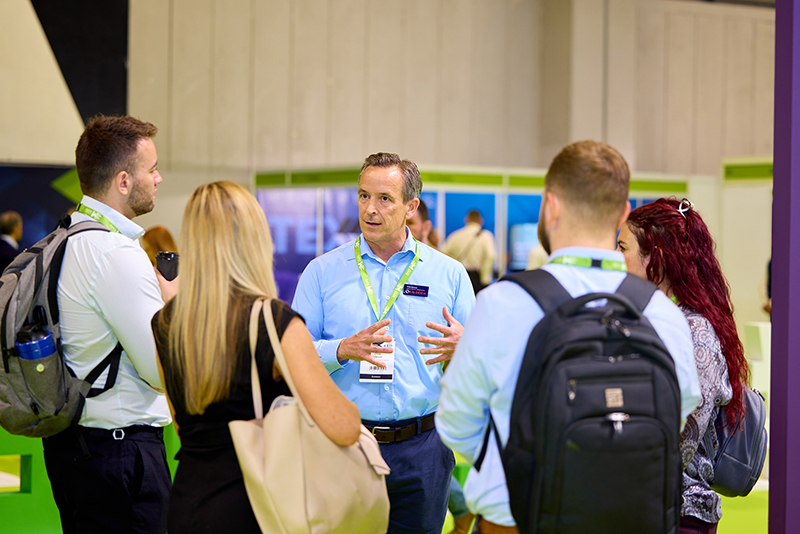
For Kaleidex, the value of K1 is practical, strategic and cultural all at once. It means a state-of-the-art building. It means greater automation. It means more efficient flow. It means bringing teams together in an environment designed around how high-quality medical manufacturing should work.
Crucially, it also means designing for compliance from day one.
“You’re in a state-of-the-art building that will be highly automated, in a great location, and designed in a way that, by design, we achieve 13485,” Chris says.
That phrase, by design, matters. Because in Chris’s view, too many facilities across the med-tech manufacturing landscape are still trying to retrofit quality and regulatory compliance into sites that were never truly built for it.
“We’re building a legacy,” he says. “A Kaleidex legacy and a K1 legacy that is all about how we set up for the next 50… the next 100 years.”
That future-facing mindset runs through everything Chris talks about. Not just infrastructure, but capability. Not just machinery, but people. Not just what Kaleidex can do now, but what customers will need next.
Having previously sat on the customer side of the table, Chris understands the gap in the market that Kaleidex has the chance to fill. At one end are giant global contract manufacturers, often too large and too rigid for many customers to get the responsiveness or service they need. At the other are smaller suppliers with limited integration and uneven capability.
Kaleidex, he believes, can occupy a powerful middle ground: specialist, high-quality, end-to-end and genuinely useful.
“We’ve got an opportunity here… to set up a fully integrated end-to-end solution,” he says. “A customer can present to Kaleidex, and Kaleidex can offer a suite and portfolio of solutions that will take care of the majority of their requirements.”
That matters in a market where the demands on med-tech manufacturers are only getting more complex. Product lifecycles are shifting. Regulation is tightening. OEMs are becoming increasingly selective about what they keep in-house and what they outsource. The need for trusted, capable partners is only growing.
Chris sees that clearly. He also sees the role automation will play.
But he is careful not to frame automation in the simplistic way people often do. At Kaleidex, this is not just about chasing margin. It is about consistency, repeatability and quality.
“In medical, the reason we’re doing automation is for consistent product manufacture,” he says. “There are so many repeatable, repetitive activities that are just more suited to a robot, just more suited to automation than a person.”
That does not mean removing people from the equation. It means using people where they matter most: in problem-solving, front-end development, design for manufacture and future capability.
“We need our smart minds,” Chris says. “We need our young talent, we need our creative thinkers.”
And that, perhaps, is the clearest expression of what Chris is trying to build at Kaleidex: an operation that can deliver brilliantly today without losing sight of tomorrow. A business that can protect quality in the present while actively designing for the future. A group with the right systems, the right site and the right people to keep moving forward.
“The way that I view that is, as an organisation, you have to be current,” he says. “And current means that you’re operating in the future state, not the current state. Because if you just operate in the current state, you’re heading backwards.”
For Chris Spencer, operations is never just about keeping things running. It is about making sure the business is ready for what is next.
And with K1 on the horizon, Kaleidex is not just preparing for the future.
It is building it.