

Robotic-assisted surgery is moving from specialist novelty towards a much broader part of modern surgical care.
The clearest evidence comes from the scale of adoption. Intuitive reported that its global da Vinci installed base reached 11,106 systems by the end of 2025, up 12% in a year, while worldwide da Vinci procedure volumes grew by approximately 18%. That momentum continued into the first quarter of 2026, with procedure growth of around 16% and the installed base reaching 11,395 systems.
Nor is growth limited to one manufacturer. Medtronic’s Hugo robotic-assisted surgery system is now available in more than 35 countries and entered commercial clinical use in the United States in February 2026. CMR Surgical reported in March 2026 that its Versius system had treated 45,000 patients across more than 30 countries. Meanwhile, Johnson & Johnson completed the first clinical cases with its OTTAVA system in 2025 and submitted the platform to the US Food and Drug Administration in January 2026.
The competitive landscape is expanding. So are the procedures, clinical specialties and hospitals using these systems and behind that expansion sits an equally important manufacturing story.
Because the performance of a surgical robot does not depend on software, imaging and robotic arms alone. It depends on an interconnected system of mechanical instruments, joints, shafts, gripping surfaces, drive interfaces, housings and precision-engineered components that must perform predictably every time.
Robotic surgery is still surgeon-controlled surgery
The phrase “robotic surgery” can create the impression that a machine is independently carrying out an operation. That is not how current commercial systems work.
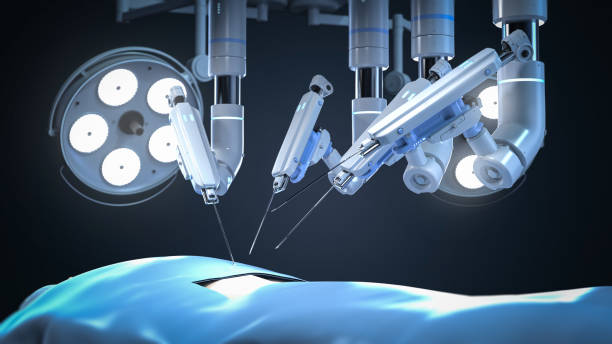
The FDA is explicit: robotic-assisted surgical devices remain under direct human control. The surgeon operates from a console, viewing the surgical field and controlling the movements of the instruments attached to the robotic arms. The robot may translate, scale or refine those movements, but it cannot perform the procedure without the surgeon.
That distinction matters. The surgeon is still making the decisions, applying clinical judgement and responding to anatomy in real time. But those decisions are transmitted through a complex chain of digital and mechanical technology before they reach the tissue. Every link in that chain has to behave as intended.
A control input may be translated into movement through multiple joints and interfaces before reaching the end of a wristed instrument. Intuitive’s EndoWrist instruments, for example, offer seven degrees of freedom, while systems such as Versius use small, fully wristed instruments intended to provide dexterity and accuracy within minimally invasive procedures.
The more articulation, control and functionality an instrument provides, the more carefully its constituent parts must work together.
Precision is not simply about making something small
In robotic surgery, precision is often discussed in terms of the accuracy of the robot’s movement. From a manufacturing perspective, however, precision has a broader meaning.
It means producing complex geometries consistently. Maintaining the relationship between connected parts. Controlling surfaces, dimensions and interfaces. Selecting materials that can withstand repeated mechanical use and, where relevant, cleaning and sterilisation. It also means ensuring that manufacturing variation does not gradually undermine the performance designed into the instrument.
A component does not have to be visually dramatic to be critical
A small gripping pad, jaw insert, pin, drive feature or machined interface may help determine whether an instrument closes correctly, moves smoothly or holds tissue and materials securely. Robotic platforms can offer extraordinary control at the console, but that control must still be converted into dependable physical action at the instrument tip.
This is where Serrations provides a particularly relevant example. The business manufactures tungsten carbide gripping inserts used in surgical instruments such as needle holders and tweezers. These inserts are designed to help the instrument grip securely without slipping when accuracy matters most. Serrations grinds individual teeth into hardened tungsten carbide, laps the components to controlled thicknesses and checks every part throughout the manufacturing process.
Serrations is already working with around 20 robotic surgery companies developing systems internationally. One customer progressed from purchasing small trial quantities to ordering 6,000 inserts each month. That is a useful illustration of how a relatively specialised component can become increasingly important as a robotic platform moves from development into broader production.
More systems mean greater demands for repeatability
The growth of robotic surgery will not only increase demand for individual components. It will increase the need to manufacture those components repeatedly, consistently and at greater scale.
A prototype may prove that a mechanism works. Commercialisation asks a harder question: can it work in the same way across hundreds or thousands of instruments?
That requires much more than achieving a target dimension once. It requires controlled processes, reliable tooling, appropriate inspection, traceability and the ability to understand how variation across several parts may accumulate within an assembly.
This is particularly important in systems designed to translate fine surgeon movements into equally fine instrument actions. The mechanical performance expected at the instrument tip can be affected by the combined behaviour of every interface behind it.
As robotic surgery expands, medical-device innovators are therefore likely to need manufacturing partners that can contribute earlier. Design for manufacture, prototyping and feasibility work become essential in identifying parts that are unnecessarily difficult to produce, assemble or inspect before those problems become embedded in a commercial design.
AI increases the value of good hardware; it does not remove it Artificial intelligence and data analytics are also becoming more prominent within robotic-surgery ecosystems.
Medtronic’s Hugo system, for example, is accompanied by the Touch Surgery ecosystem, which uses surgical video and performance data to provide analytics and support continuous improvement. CMR similarly positions its digital ecosystem around actionable data and insights.
This does not mean the physical instrument becomes less important
Arguably, it makes dependable hardware even more important. Data can only describe the performance of the system that generated it. An intelligent platform still depends on stable, repeatable mechanical behaviour if its analytics are to be useful and if surgeons are to build confidence in how the system responds.
AI may help teams understand performance, identify patterns and improve workflows. It cannot compensate indefinitely for an instrument that grips inconsistently, an interface that wears unpredictably or a component that varies from one manufactured batch to another. The digital and physical elements have to advance together.
This does not mean the physical instrument becomes less important
Arguably, it makes dependable hardware even more important. Data can only describe the performance of the system that generated it. An intelligent platform still depends on stable, repeatable mechanical behaviour if its analytics are to be useful and if surgeons are to build confidence in how the system responds.
AI may help teams understand performance, identify patterns and improve workflows. It cannot compensate indefinitely for an instrument that grips inconsistently, an interface that wears unpredictably or a component that varies from one manufactured batch to another. The digital and physical elements have to advance together.
This does not mean the physical instrument becomes less important
Arguably, it makes dependable hardware even more important. Data can only describe the performance of the system that generated it. An intelligent platform still depends on stable, repeatable mechanical behaviour if its analytics are to be useful and if surgeons are to build confidence in how the system responds.
AI may help teams understand performance, identify patterns and improve workflows. It cannot compensate indefinitely for an instrument that grips inconsistently, an interface that wears unpredictably or a component that varies from one manufactured batch to another. The digital and physical elements have to advance together.
Sources
Intuitive Surgical, 2025 fourth-quarter and full-year results: https://investor.intuitivesurgical.com/node/22616/pdf
Intuitive Surgical, first-quarter 2026 results:https://investor.intuitivesurgical.com/node/23036/pdf
US FDA, Computer-Assisted Surgical Systems: https://www.fda.gov/medical-devices/surgery-devices/computer-assisted-surgical-systems
Medtronic, Hugo robotic-assisted surgery system: https://www.medtronic.com/en-us/healthcare-professionals/specialties/surgical-robotics/hugo-robotic-assisted-surgery.html
Medtronic, first US commercial Hugo procedure: https://news.medtronic.com/2026-02-17-Medtronic-announces-first-surgery-with-Hugo-TM-robotic-assisted-surgery-system-in-the-U-S-performed-at-Cleveland-Clinic
Johnson & Johnson, first OTTAVA clinical cases: https://www.jnj.com/media-center/press-releases/johnson-johnson-medtech-announces-completion-of-first-cases-with-ottava-robotic-surgical-system
Johnson & Johnson, OTTAVA FDA submission: https://www.jnj.com/media-center/press-releases/johnson-johnson-submits-ottava-robotic-surgical-system-to-the-u-s-food-and-drug-administration
CMR Surgical, Versius: https://cmrsurgical.com/
Intuitive, EndoWrist instrument information: https://www.intuitive.com/en-us/healthcare-professionals/ecosystem/tender-faq
Kaleidex, Serrations case study: https://kaleidexgroup.com/case-study/serrations-x-kaleidex/
Kaleidex Group capabilities: https://kaleidexgroup.com/capabilities/
Oracle Precision medical manufacturing capabilities: https://oracle-precision.co.uk/industry-sectors/medical/
Kirkstall Precision medical capabilities: https://kirkstallprecision.co.uk/sectors/medical/
Kaleidex One: https://kaleidexgroup.com/kaleidex-one/