

Serrations on joining Kaleidex Group: grip, precision and the power of doing one thing brilliantly
Some businesses grow by doing more. Serrations has built its reputation by doing one thing exceptionally well.
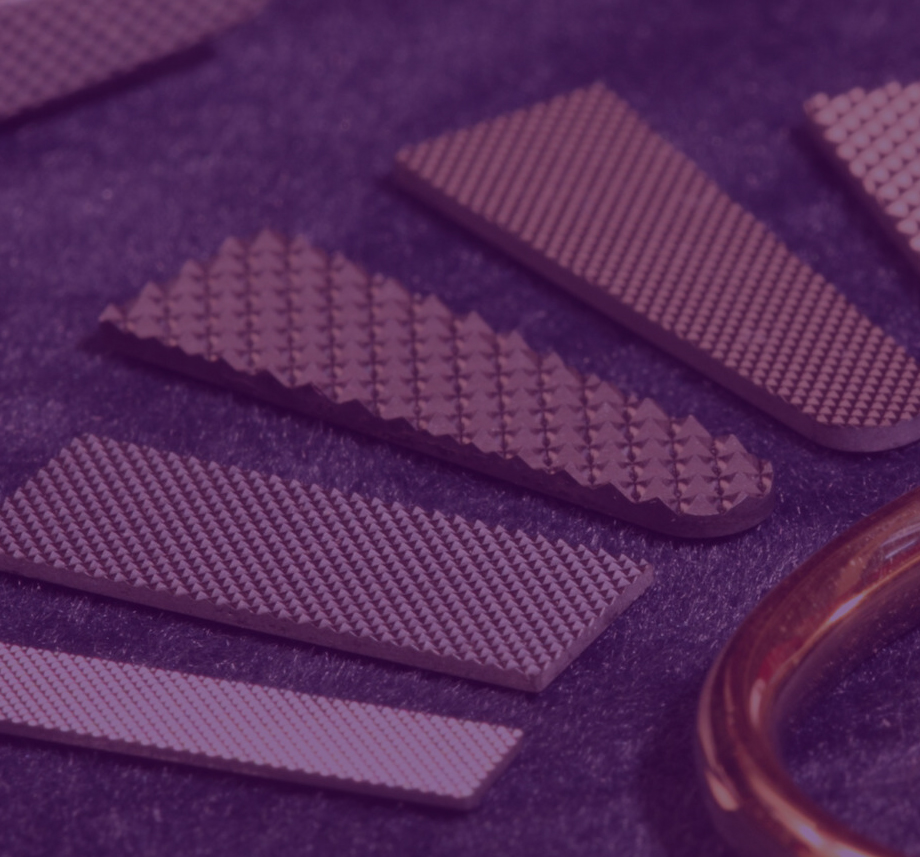
Based in Chesterfield, Serrations is a specialist manufacturer of tungsten carbide inserts used in the production and repair of surgical instruments. These small, high-precision components form the gripping pads at the end of instruments such as needle holders and tweezers, helping surgeons hold materials securely when accuracy matters most.
It is a niche field. But within that niche, Serrations has become a name people know. “We make a tungsten carbide insert, which is a component part for a surgical instrument called a needle holder,” explains James Hartley, Managing Director at Serrations. “It looks very much like a pair of scissors, but it grips rather than cuts.”
That grip is the whole point. For a surgeon, the instrument has to perform exactly as expected. It has to hold securely, without slipping. Serrations makes the part that helps make that possible.
The company’s core product, Super Grip-it, is engineered by grinding individual teeth into hard, wear-resistant tungsten carbide, creating a sharp, well-defined point with strong gripping properties. The inserts are also diamond lapped on the reverse side to a specified thickness, helping create a clean surface ready for brazing to the instrument.
In other words, this is not volume manufacturing in the throwaway sense. It is precise, repeatable, highly specialist work where small details make a very big difference.
For James, the simplest way to describe the business is also the most accurate. “We do one thing, do it well,” he says.
That focus has helped Serrations build a reputation far beyond Derbyshire. Around 99% of the company’s work is exported, with customers across 26 countries and 129 customers in 2023. Key markets include Germany, France, the USA, Pakistan, China, Italy, South Africa, Australia, Brazil and India.
It has also led to something rarer: the company name becoming shorthand in the market. “The parts are known as serrations now,” James says. “It’s that kind of Hoover effect.”
That kind of recognition does not happen overnight. Serrations was founded in Sheffield in 1993 by Keith and James Hartley, before later moving to Chesterfield. Today, the business is owned and run by James and Bryony Hartley, supported by an experienced team, including people who have been with the company for over 20 years.
That continuity matters. The knowledge inside the business has been built over decades. So has the way Serrations works with customers.
James points to flexibility as one of the reasons customers continue to choose the business. In the early days, competing against larger and more established suppliers meant finding ways to be useful, responsive and easy to work with.
“If we said it was eight weeks delivery, they’d say, well, that’s too long,” he says. “We can send some sooner, or we can try and help you out.”
That willingness to help has become part of the Serrations story. So has the personal side of the business. James recalls customers who stayed with long-standing suppliers for years, before eventually moving to Serrations. The reason was not just product quality. It was the relationship. The visits. The conversations at exhibitions. The fact that Serrations kept showing up without pushing too hard.
“You’re ready for them when they want to come to you,” he says.
Behind the relationship sits a highly controlled manufacturing process. Tungsten carbide arrives at Serrations already pressed and hardened into shape, but in a rough form. The team diamond laps each side to make the inserts flat and uniform in thickness. The teeth are then ground into the carbide using modified dicing machines originally designed for the semiconductor wafer industry.
“They’re extraordinarily precise,” says James. “Far more than we need, but that’s great. It gives us that certainty.”
Once the teeth are ground, the inserts go through final lapping, ultrasonic cleaning, inspection, boxing and shipping. Quality checks take place throughout the process, not simply at the end. “Every part gets checked,” James says.
For Kaleidex Group, Serrations represents exactly the kind of specialist manufacturing business it wants to support: technically strong, deeply experienced, customer-focused and trusted in its market.
For James and Bryony, joining Kaleidex was not an obvious or immediate decision. They were not actively looking to sell. They also had understandable reservations about what outside investment might mean for the company, the team and the name they had built.
But the Kaleidex approach felt different.
Bryony says the first contact stood out because it was not a generic acquisition message. There was research behind it. There was a sense that Kaleidex understood what made Serrations valuable. More importantly, they were not looking to strip away the company’s identity.
“They valued the history of the company,” says Bryony. “They valued our workforce.”
That was crucial. Serrations was not just a business to James and Bryony. It was a family-founded company with a reputation, a loyal customer base and a team they wanted to protect. Kaleidex recognised that. The ambition was not to change Serrations into something else, but to help it grow as itself.
That support has already started to show.
One of the immediate priorities was investment in machinery and resilience. As Bryony explains, Kaleidex came in and asked where the single points of failure were. One machine was identified as critical: if it went down, production could stop. That risk has now been addressed, with new machinery supported by Kaleidex investment.
“They came in and said, what do you need?” says Bryony.
A new diamond grinding machine is already in place. Another machine is on the way. Further investment is planned. For a smaller business, these decisions often take time. Capital has to be built up. Purchases are phased. Growth happens carefully. With Kaleidex, the pace can accelerate.
“We probably would have done it,” says Bryony. “But it would have taken us a lot longer.”
That acceleration matters because the opportunity ahead is significant. Existing customers are increasing their use of Serrations. New customers are coming on board. Across the world, from the Far East to the USA, surgical instrument manufacturers and repairers are turning to Serrations for their tungsten carbide inserts.
Then there is robotic surgery.
Serrations is already involved with around 20 robotic surgery companies developing systems around the world. While the technologies differ, many share the same basic requirement: gripping. One company began with very small trial quantities and now buys 6,000 inserts a month. For James, that future is exciting and being part of Kaleidex has brought renewed energy.
“It’s given me a new vigour,” he says. “A new lease of life.”
That is the story of Serrations today. A specialist business with a long history, a global reputation and a product so well known that its name has become part of the category language. Now, as part of Kaleidex Group, it has the investment, support and shared ambition to take the next step.
Still doing one thing. Still doing it brilliantly. Only now, with more room to grow.