

A founder’s journey from organic growth to group-powered ambition
Background: Building Oracle from first principles
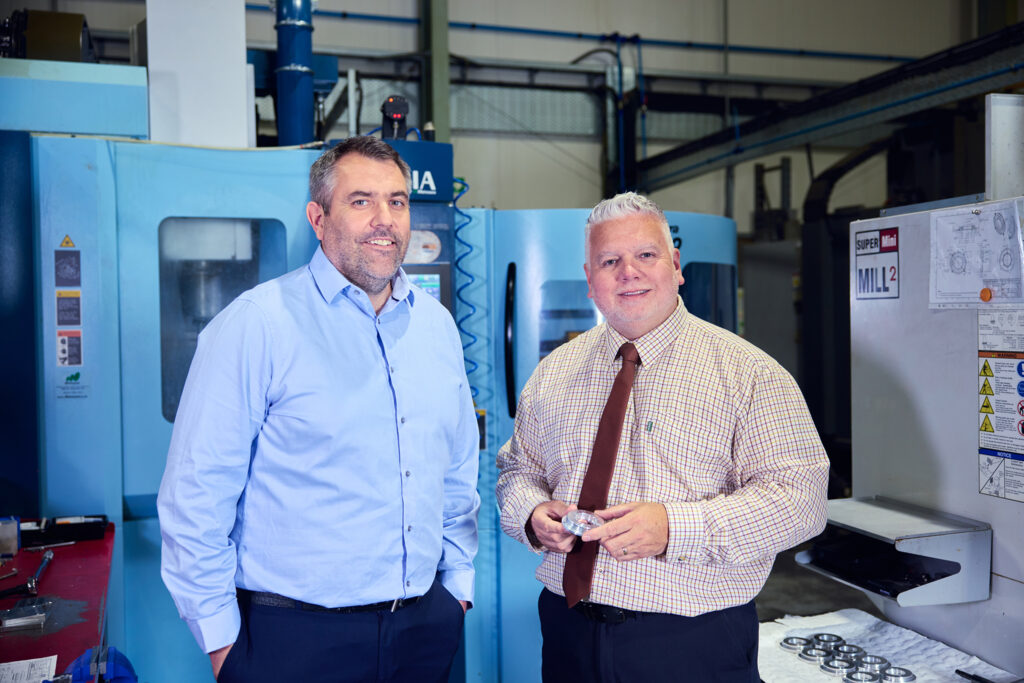
Oracle Precision was founded in November 2011 by Shaun Palmer and Ryan Taylor with a clear intention: to manufacture highly complex precision components for critical industries, predominantly medical and aerospace.
From the outset, the ambition was not to become a high-volume subcontractor competing on price. Instead, Oracle focused on becoming a trusted manufacturing partner to companies that lacked in-house production capability but required deep technical expertise and long-term collaboration.
“We always looked for what I call our ideal customer profile,” Shaun explains. “Companies that needed more than just a supplier. They needed a partner who could support them through their own product lifecycle.”
That philosophy shaped the business from day one. Oracle developed a reputation for taking on projects others avoided, highly complex components requiring multiple production stages, advanced materials, and regulatory oversight. Unlike conventional engineering parts that leave a lathe and ship out the door, Oracle’s work often moves through turning, milling, revisits, finishing and inspection before completion.
Capacity planning became an organic, living process. Commercial decisions were tightly linked to production realities. And crucially, customer relationships were built to last.
“We’re not a high customer turnover business,” Shaun notes. “Some of our customers have been with us twelve or thirteen years. That only happens if you consistently deliver.”
Over time, Oracle invested steadily in automation and technology to enable lights-out manufacturing, increasing capacity without inflating headcount. The result was sustainable, organic growth. In more than a decade of trading, the business has never made a loss.
What sets Oracle apart: complexity, culture, and commitment
In a crowded subcontract manufacturing market, Oracle distinguishes itself not simply through capability, but through mindset.
The company holds both ISO 13485 medical device approval and aerospace, defence, and marine accreditations, a rare combination for a business of its size. That regulatory commitment reflects the seriousness of the sectors it serves.
But accreditation alone does not define Oracle.
“We tend to do the things that other people avoid or can’t do,” Shaun says. “And to my memory, we haven’t failed on those complex projects.”
Design-for-manufacture support, cost reduction through smarter engineering, post-delivery collaboration, and what Shaun describes as “hand-holding” through technical challenges form part of the offer. Customers do not just buy a component; they buy access to experience, availability, and problem-solving.
Culture plays an equally important role. Staff retention is strong, with multiple team members celebrating ten, twelve, and even thirteen years of service. Apprentices are developed carefully, with several progressing into senior or specialist roles.
“We create a relaxed environment,” Shaun reflects. “It takes the pain away from doing something incredibly complex. And the learning journey becomes much quicker.”
That balance, high technical challenge within a stable, supportive environment, has underpinned Oracle’s resilience, including through the Covid period, during which the company made no losses, made no redundancies, and continued investing in its people.
A defining chapter: joining a wider group
For many years, Shaun and Ryan resisted external investment. Growth was funded through earnings. If they wanted to invest a pound, they had to earn it first. That discipline protected the business and ensured careful expansion.
However, it also placed natural limits on speed and scale.
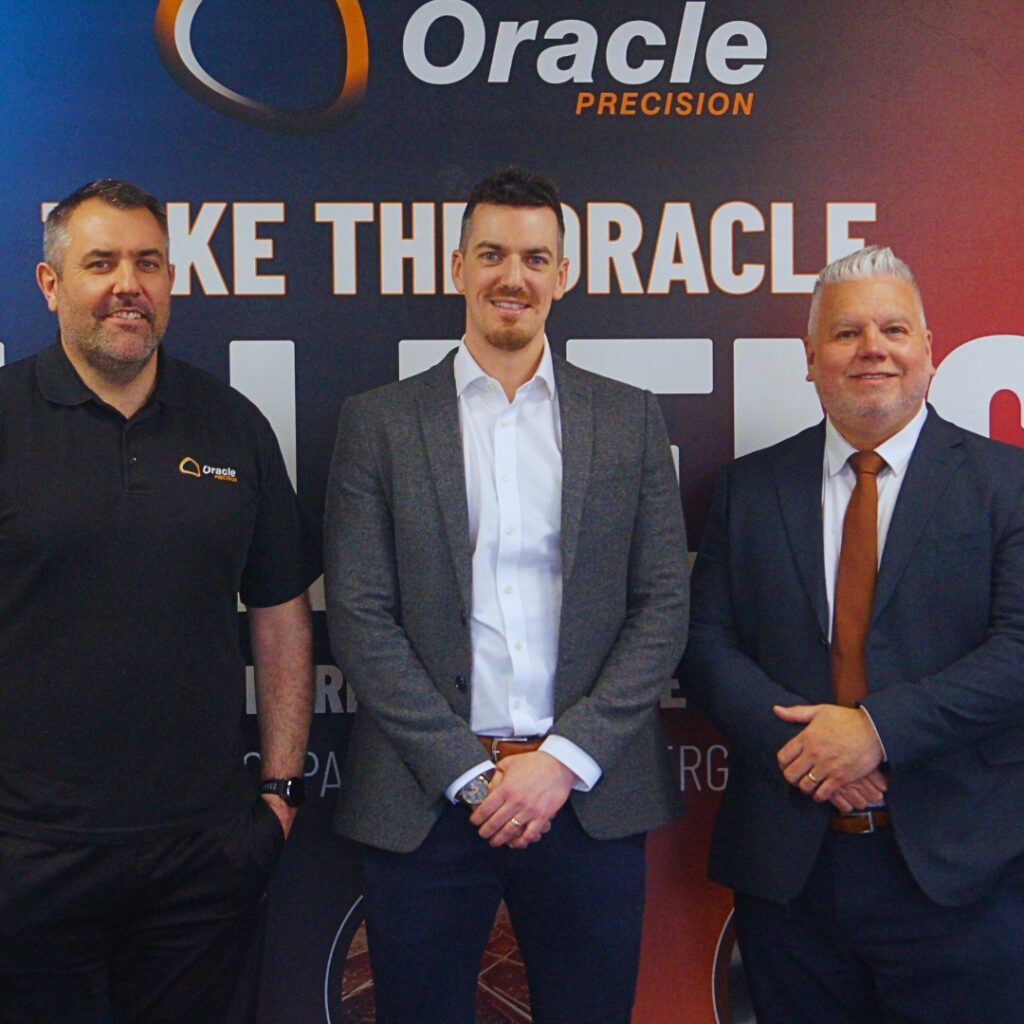
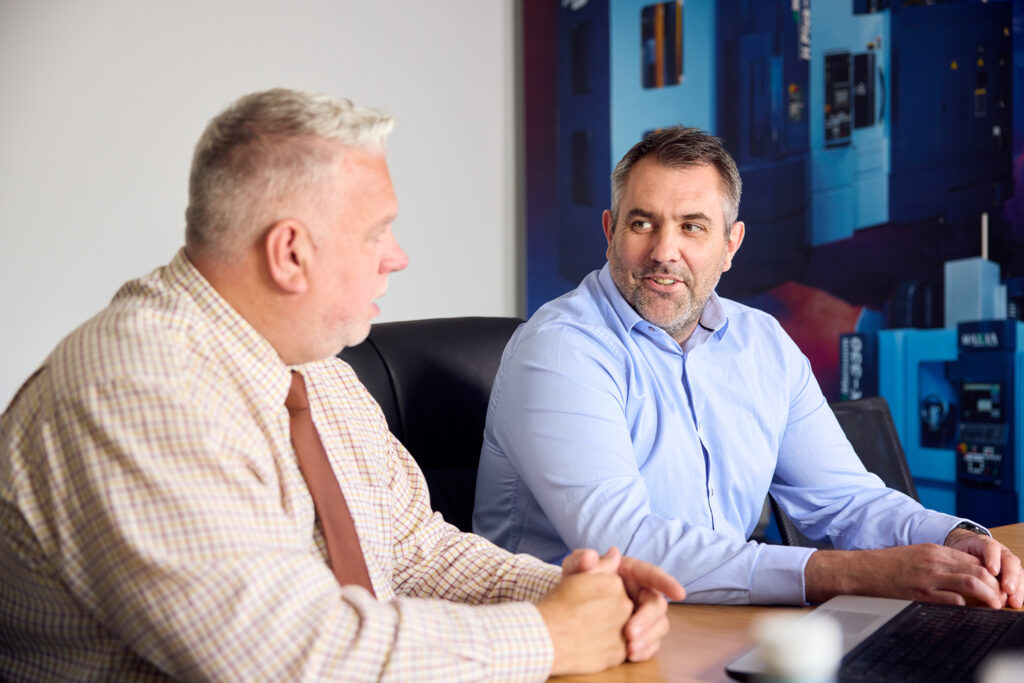
“The group has given us resources to make the dreams come true,” Shaun says. “Previously, growth was organic and controlled. Now we have access to broader capability, wider skills, and more energy behind the commercial message.”
Being part of a specialist group has allowed Oracle to strengthen its focus on healthcare, orthopaedics, and regulated markets where it already had deep experience, including technical file development for hip replacements more than two decades ago.
The shift has not diluted Oracle’s identity. Instead, it has broadened its arsenal. Capabilities once missing can now be accessed through complementary businesses within the group, enabling Oracle to offer a more complete lifecycle solution.
For Shaun, the most exciting element is the ability to be more strategic about market segmentation and long-term positioning.
“We can now focus more clearly on the sectors with longevity, while still maintaining balance. It’s about being honest about what we’re great at, and investing behind that.”
Looking ahead: success in 2026 and beyond
Success for Oracle in 2026 is not defined purely by revenue growth. It is about balance, capability, and stability.
Shaun describes three guiding pillars:
Where do we make money sustainably?
What is the market telling us?
What are we genuinely good at?
Future investment will continue to focus on automation, robotics, additive technologies, and facility development capable of repeatedly producing highly technical components to world-class standards. Lights-out manufacturing remains a strategic advantage, allowing greater productivity without overextending human resources.
At the same time, apprenticeship development remains central. Skills shortages are a national challenge in engineering, and Oracle intends to build its own pipeline of capability rather than rely solely on the market.
“I know engineering businesses that wouldn’t know where to start with some of the products we make,” Shaun says. “That inherent and growing capability is what sets us apart.”
From a revised rail safety device that became nationally successful in Oracle’s early years, to confidential medical innovations shaping next-generation healthcare products, the business has consistently delivered on high-stakes programmes.
Looking ahead, medical manufacturing is expected to account for roughly 70 percent of focus, while aerospace and other regulated sectors remain important. The ambition is not to chase volume, but to strengthen position in markets where complexity, precision, and regulatory excellence matter most.
For Shaun, the journey from founder to group-backed commercial leader represents both continuity and renewal.
Oracle’s core principles remain intact: partnership over transactions, complexity over commoditisation, and long-term relationships over short-term wins. But with broader resources behind it and a sharper strategic focus, Oracle Precision enters its next chapter positioned not just to sustain what it has built, but to amplify it.